Learning a skill takes more than ambition. Attending university takes more than a place in a classroom. Sometimes, what stands in the way is equipment. Sometimes, it’s the journey itself.
We support practical infrastructure that helps close that distance, working through local institutions in Pakistan.
20↗
Stitching machines donated
02
Centres in Umerkot & Chelhar
01
Electric university shuttle
OUR WORK, ON THE GROUND
Two projects. One purpose.
01 / LIVELIHOODS
A skill to learn. A machine to keep.
UMERKOT & CHELHAR · SINDH
STITCHING SKILLS & LIVELIHOODS
More than a machine.
We donated 20 stitching machines from America through the Pakistan Hindu Council, which sent them directly to centres in Umerkot and Chelhar.
The purpose is to support stitching training with something that lasts beyond the lesson: a machine recipients can keep for life, and a tool they can use to put their skills to work.
Inside the project +
The resource 20 stitching machines.
The local connection Pakistan Hindu Council; centres in Umerkot and Chelhar.
The goal Skills, continued access to equipment, and a route toward earning a livelihood.
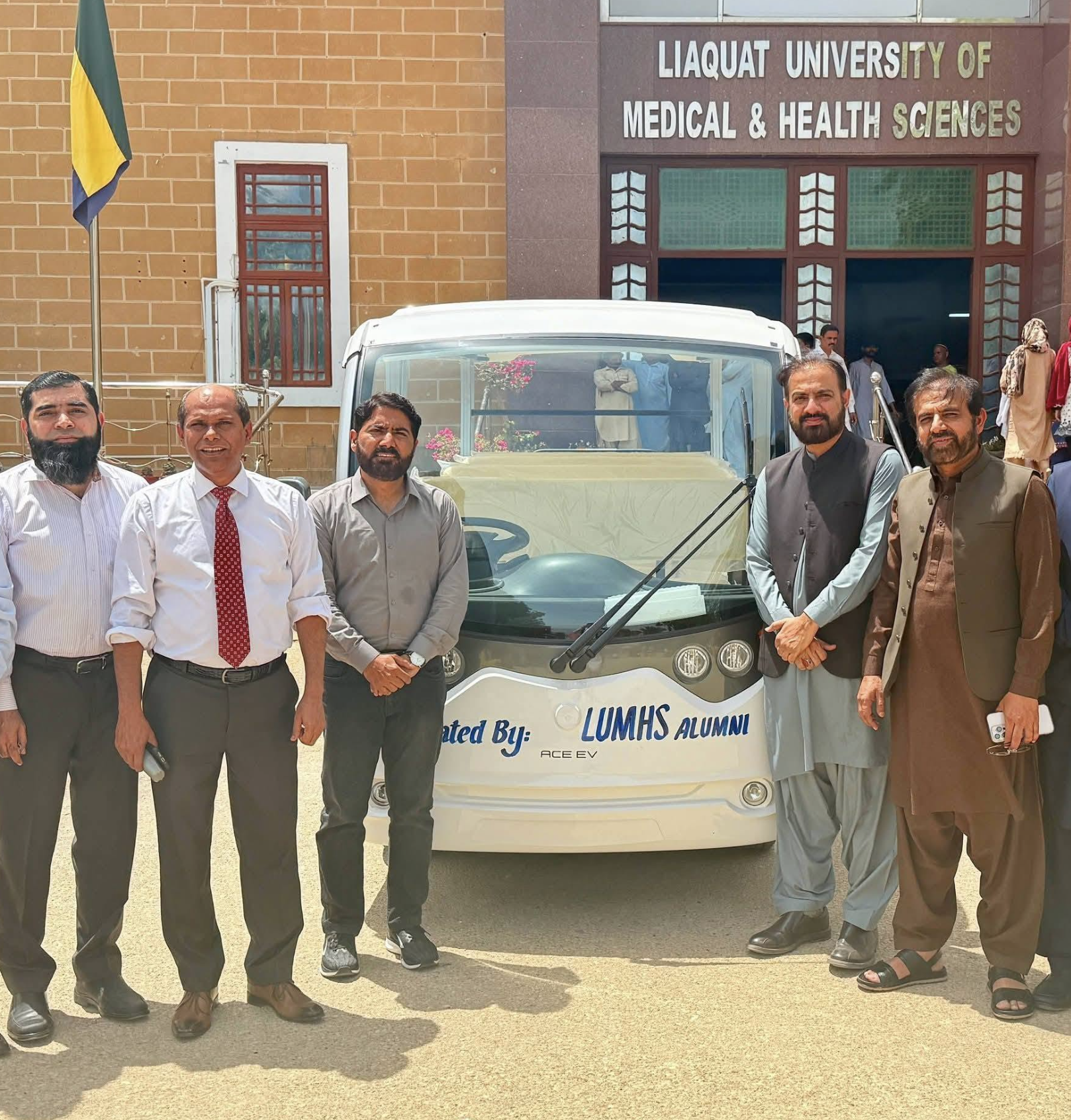
AI-EDITED IMAGEEdited with AI to reduce grain and improve clarity. AI enhancement may alter fine details. View the unedited original photograph ↗At LUMHS. The vehicle’s alumni acknowledgement reflects the transfer facilitated through the founder’s father, a university alumnus.
02 / ELECTRIC CAMPUS TRANSPORTATION
A clearer path to the classroom.
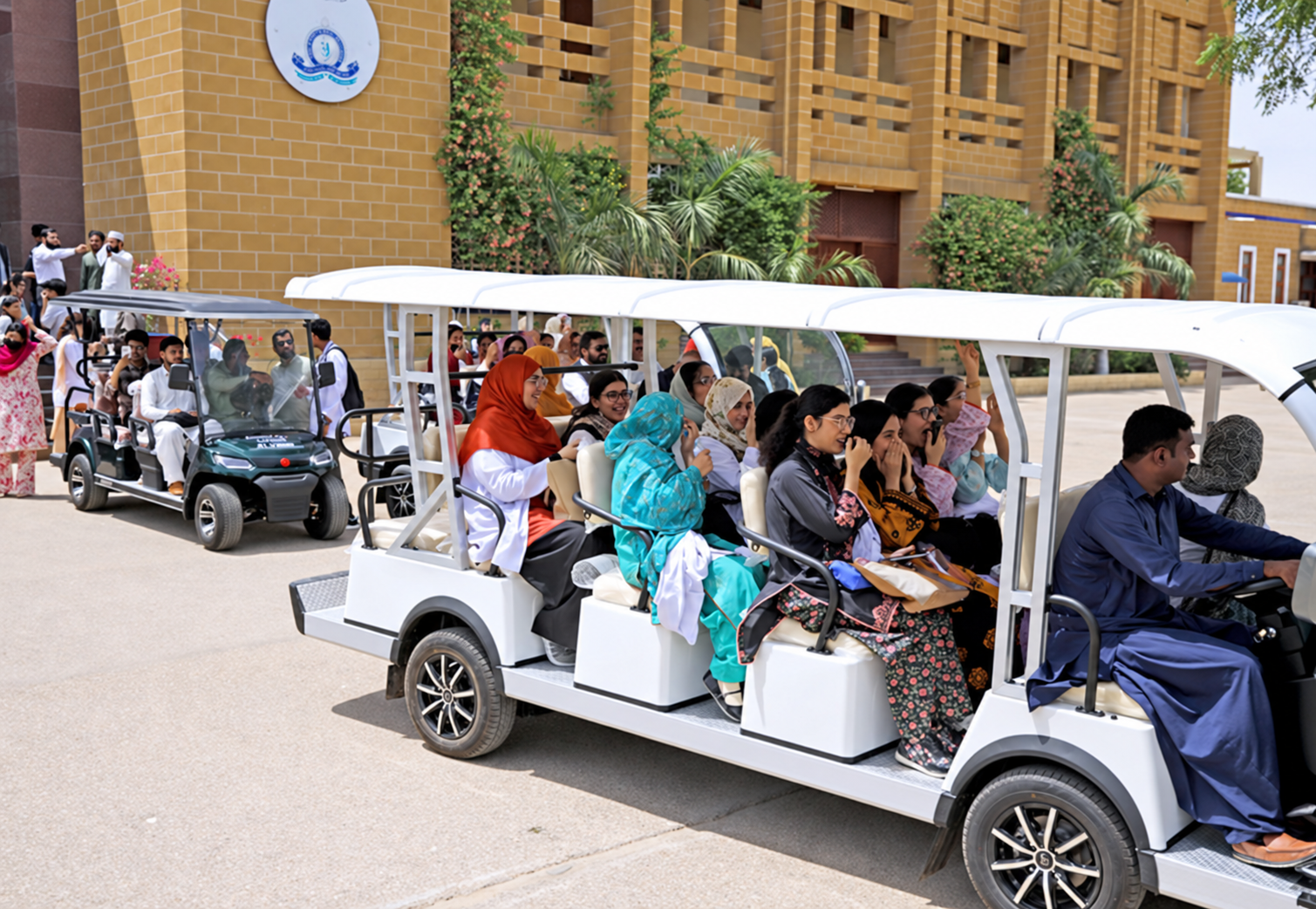
The South Asian Infrastructure Initiative raised the full funding for one electric shuttle donated to Liaquat University of Medical and Health Sciences in Pakistan.
Founder Madhav Kumar worked directly with Dr. Feroz Ali, dean of the dental school, to coordinate the project. His father’s connection as a LUMHS alumnus helped establish contact with the university.
The electric shuttle supports students’ journeys to class. The project grew from a focus on educational access, including the safety concerns women faced walking to campus.
Inside the project +
The contribution Full funding for one electric campus shuttle, raised through the initiative’s efforts.
Direct coordination Madhav Kumar worked with Dr. Feroz Ali, dean of the dental school at LUMHS.
Community support Fundraising through WhatsApp groups, friends, and Minnesota’s desi community.
Donation acknowledgement The payment was transferred through Madhav’s father’s bank account. As a university alumnus, his involvement is reflected in the vehicle’s alumni acknowledgement; the initiative’s fundraising covered one whole shuttle.
A PERSONAL CONNECTION
Madhav KumarFounder & President
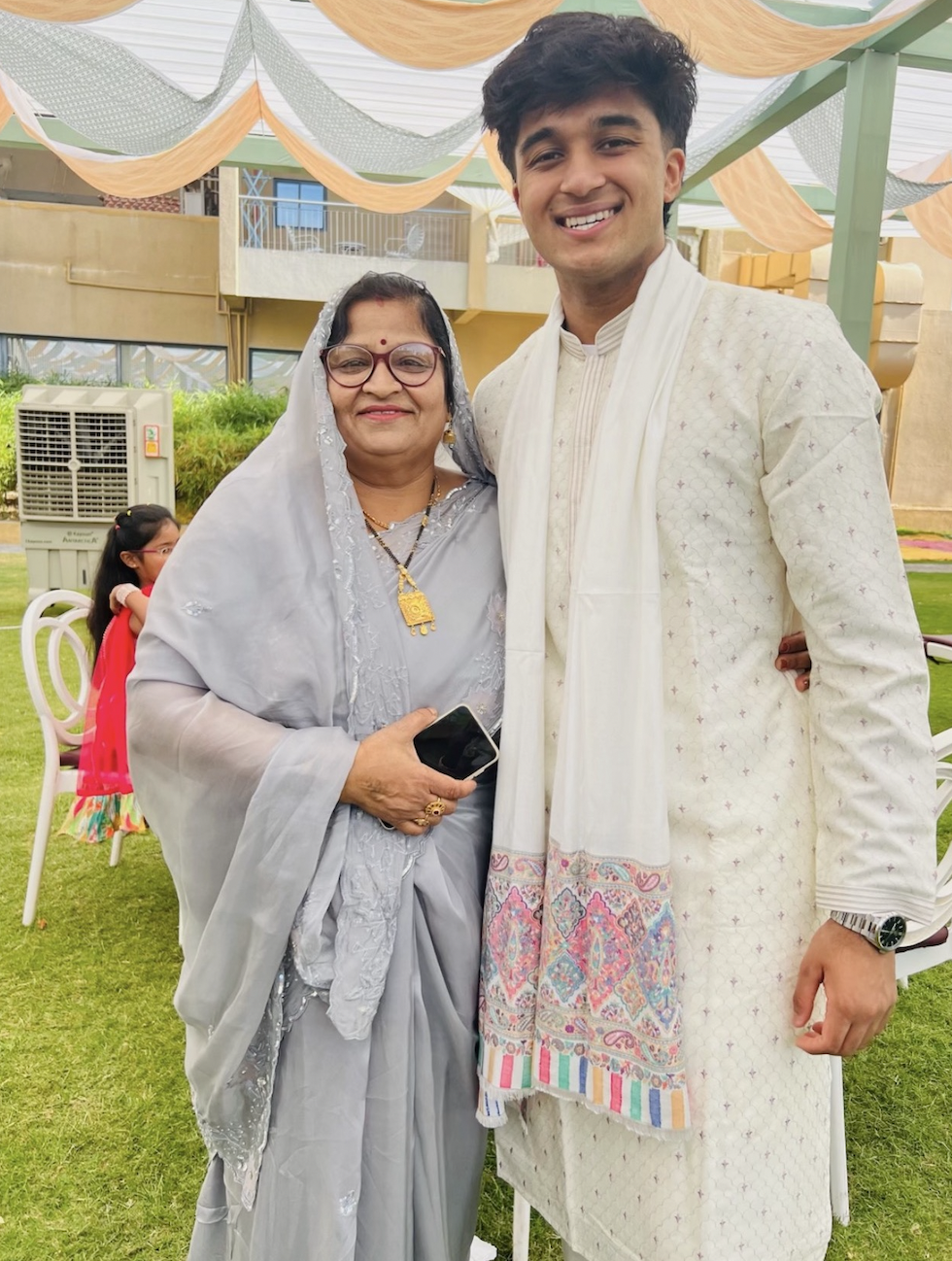
With my masi, who lives in Umerkot, Pakistan.
“What is getting between someone and an opportunity?”
My connection to the Pakistani Hindu community made me want to expand access to education. My first idea was a school project in Pakistan. But the planning fell through. I couldn’t be there often enough, and I don’t speak Sindhi. Communicating and coordinating from a distance proved difficult.
I had to reconsider what I could realistically build from Minnesota. That meant thinking about the people I could bring together here, the connections I had in Pakistan, and the institutions already working there.
I raised money by sharing the initiative through WhatsApp groups, reaching out to friends, and drawing on support within Minnesota’s desi community. My father’s connection as an alumnus helped me establish contact with Liaquat University of Medical and Health Sciences, where I worked directly with Dr. Feroz Ali, dean of the dental school. Through the initiative’s fundraising, I raised the full funding for one electric shuttle. For the stitching machines, we worked through the Pakistan Hindu Council, which sent the machines to centres in Umerkot and Chelhar.
The university project also changed how I thought about education. I had considered donating books. My mother emphasized the importance of safe transportation, and I agreed to support the shuttle before I fully understood her perspective. Later, a conversation with Dr. Feroz Ali made the issue more concrete: he described the catcalling women faced on the walk to class and how transportation helped women who had been missing morning classes attend.
I started out wanting to build a school. The work that followed taught me to pay closer attention to what stands between someone and the education or skills already available to them. For these projects, that has meant helping students reach a classroom and providing equipment that people can keep using after training.
MK
Madhav KumarFounder & President, South Asian Infrastructure Initiative
THE COMMUNITY BEHIND THE WORK
Minnesota → Pakistan
Raised here. Put to work there.
The initiative connects two communities I belong to. In Minnesota, I raised support through WhatsApp groups, friends, and the desi community. In Pakistan, family connections and established institutions helped connect that support with practical needs.
The work depends on more than one person: the people who contribute, the people who help make introductions, and the people locally who put the resources to use.
01 / RAISING SUPPORT
Starting with people I could reach.
I used WhatsApp groups and conversations with friends and Minnesota’s desi community to share the initiative and raise money for the work.
02 / MAKING CONNECTIONS
A family connection. A local institution.
My father’s alumni connection helped me reach LUMHS, and I coordinated directly with Dr. Feroz Ali, dean of the dental school. The Pakistan Hindu Council connected the stitching machine donation with centres in Umerkot and Chelhar.
03 / MAKING IT USEFUL
Resources with a practical purpose.
An electric university shuttle supports access to classes. Twenty stitching machines support a training pathway in which recipients can keep the equipment for life.
To the friends, families, and community members who contributed: thank you for helping make these projects possible.
HOW WE THINK ABOUT THE WORK
Useful from the start. Useful over time.
Start with the barrier. Build toward possibility.
01
Listen locally.
Local institutions understand the places and people they serve. Their perspective helps identify where practical support can be useful.
02
Make it tangible.
Support a specific resource with a clear purpose, whether it is a machine for training or a vehicle for reaching class.
03
Look beyond delivery.
The goal extends beyond making a donation. We want to understand how the resources are used and what support is needed next.